Virtual Nursing Assistants: Bridging the Gap Between Care and Admin

Updated: Aug 5
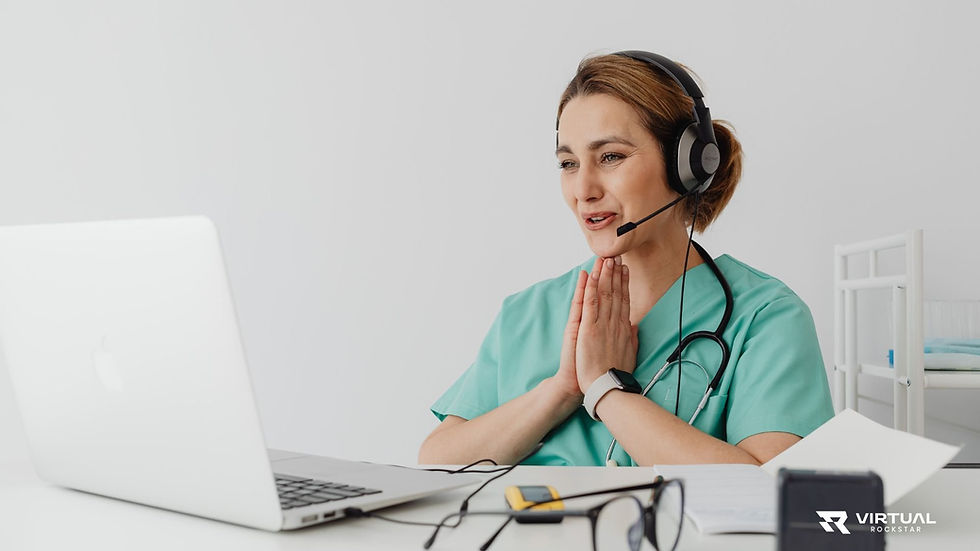
Every healthcare provider knows this struggle: the more time you spend on paperwork, the less time you have for patients. Charting, insurance follow-ups, appointment reminders, they're all essential, but they pull nurses and practitioners away from what they do best, providing care.
That's why more clinics and private practices are turning to virtual nursing assistants, healthcare-trained professionals who work remotely to handle the administrative, coordination, and communication tasks that bog down an in-house team, letting practices maintain a high level of patient care while reducing burnout and overhead costs.
What Is a Virtual Nursing Assistant?
A remote healthcare professional with clinical training, often a registered nurse or licensed practical nurse, who provides administrative, coordination, and patient communication support virtually. Unlike a general virtual assistant, a VNA is a healthcare specialist trained in medical workflows, EMRs, and patient interaction, working directly with providers and admin teams to keep patient care seamless and compliant.
What Are the Core Roles of a Virtual Nursing Assistant?
Patient communication and education.
VNAs serve as the front line for patient contact, answering inquiries, sending pre-visit instructions, and following up post-appointment: sending check-in and follow-up messages, providing health education resources the clinical team has already prepared, and managing post-discharge care reminders. Patients feel heard and cared for even outside clinic hours.
Documentation and charting assistance.
VNAs help manage documentation tasks that typically consume a large chunk of clinical time: inputting patient data into EMR systems, transcribing provider notes, managing chart updates and digital filing, and ensuring data accuracy for compliance. This reduces charting backlogs and helps providers close documentation faster.
Scheduling and coordination.
Because nurses understand the flow of clinical operations, they handle scheduling with precision and empathy: appointment scheduling and rescheduling, coordinating patient follow-ups and referrals, and managing pre-authorization and medical records requests.
Insurance and billing support.
VNAs can also manage aspects of the billing and insurance process: eligibility verification and benefits checks, preparing documentation for claims, and communicating with payers about pre-authorizations. When claims are clean and complete, reimbursements arrive faster with fewer denials.
Administrative support around clinical workflows.
Some VNAs, particularly those with RN backgrounds, support intake and coordination functions under physician-established protocols: reviewing patient intake forms for completeness, flagging cases that meet criteria the clinical team has already defined for provider review, and assisting with care coordination between providers.
Rockstar Insight: It's worth being precise here. Any flagging or triage-adjacent function operates strictly within protocols the clinical team has set and under physician oversight. A VNA identifies that a case meets pre-established criteria for provider attention. They don't independently exercise clinical judgment about urgency or make an autonomous triage decision, that authority stays with the licensed provider.
Why Are Virtual Nursing Assistants in Such High Demand Right Now?
The rise of virtual nursing assistants is driven by a simple reality: healthcare staff are overworked and under-supported. Research on nursing documentation burden has found nurses spend on average roughly 23 percent of a 12-hour shift interacting with EHR systems, and American Nurses Association survey data consistently identifies excessive administrative tasks like charting and documentation among the top contributors to nurse burnout, with more than half of surveyed nurses reporting burnout symptoms in recent years.
By delegating time-consuming tasks to trained VNAs, clinics can reclaim hours of clinical time each day, reduce administrative bottlenecks, lower payroll costs, and improve patient engagement. VNAs don't replace nurses. They support them, creating balance and bandwidth where it's needed most.
What Are the Real Benefits of Hiring a Virtual Nursing Assistant?
More time for patient care.
VNAs handle routine but critical tasks, letting in-house nurses and doctors focus on direct care and clinical decisions.
Reduced burnout and turnover.
By removing repetitive documentation and coordination duties, your team maintains energy and motivation, reducing costly staff turnover.
Improved patient follow-up.
VNAs ensure no patient slips through the cracks by managing follow-up schedules, reminders, and education, leading to better outcomes and stronger retention.
Lower costs without cutting quality.
Hiring a local nurse or admin professional can cost $60,000 to $80,000 a year. A virtual nursing assistant typically costs $20,000 to $28,000 annually, offering significant savings.
Stronger compliance and accuracy.
Rockstar Global VNAs are trained in HIPAA-compliant practices, EMR data entry, and documentation accuracy, reducing risk while enhancing operational efficiency.
Why Does the Philippines Produce Such Strong Virtual Nursing Talent?
The Philippines has become a global hub for healthcare outsourcing, particularly for virtual nursing assistants. Many are licensed nurses or allied health graduates, bringing a genuine clinical foundation. Excellent English communication skills pair with a naturally compassionate, patient-centered tone. Filipino professional culture values care, respect, and service, aligning directly with the mission of nursing itself, and many have direct experience in telehealth, billing, or hospital administration settings already. Filipino VNAs bring the same care-driven mindset that defines great nursing, delivered remotely, with precision and heart.
How Do Virtual Nursing Assistants Actually Bridge the Gap Between Care and Admin?
Traditional healthcare models often divide clinical and administrative work. The problem is patients experience that divide too, through slow responses, missed follow-ups, or confusing paperwork. VNAs bridge that gap by keeping communication continuous between patients and providers, ensuring documentation supports real-time clinical decision-making, and managing the care coordination layer that often falls between clinical and clerical work. They bring the human touch back into healthcare workflows, supported by digital efficiency, not replacing it.
How Should You Actually Hire a Virtual Nursing Assistant?
Look for verified healthcare backgrounds, RN, LPN, or allied health, real HIPAA training and compliance tools, genuine proficiency in EMR/EHR systems, strong communication and empathy skills, and real performance oversight and accountability behind the individual VNA.
A reputable agency handles screening, onboarding, and ongoing management, ensuring your VNA is not just qualified, but fully integrated into your clinic's rhythm from day one.
Bringing Technology and Compassion Together
The rise of virtual nursing assistants marks a genuine turning point in how care gets delivered and managed. By blending technology, empathy, and clinical expertise, VNAs help clinics run more efficiently while keeping care deeply human. They don't replace your team. They empower it, and with the right support, you can finally close the gap between admin overload and the compassionate care you set out to provide.
FAQ
Can a virtual nursing assistant make independent clinical triage decisions?
No. A VNA can review intake forms and flag a case that meets criteria the clinical team has already established for provider attention, but the actual clinical judgment about urgency and the triage decision itself remains with the licensed, supervising provider.
How much time do nurses actually spend on documentation instead of direct patient care?
Research on EHR documentation burden finds nurses spend roughly 23 percent of a 12-hour shift interacting with electronic health records, time a virtual nursing assistant can help reclaim by handling much of that documentation and charting support directly.
How much can a clinic save by hiring a virtual nursing assistant instead of a local hire?
A local nurse or administrative hire can cost $60,000 to $80,000 annually, while a virtual nursing assistant typically costs $20,000 to $28,000, a significant savings without sacrificing clinical background or training.
Does administrative burden actually contribute to nurse burnout?
Yes, significantly. American Nurses Association survey data consistently identifies excessive administrative tasks like charting and documentation among the top contributors to burnout, with more than half of surveyed nurses reporting burnout symptoms in recent years.
What should a practice verify before hiring a virtual nursing assistant?
A verified healthcare background (RN, LPN, or allied health), genuine HIPAA training, real EMR/EHR proficiency, strong communication and empathy skills, and agency-level performance oversight and accountability, not just a resume claim of experience.


